What Is Baklava?
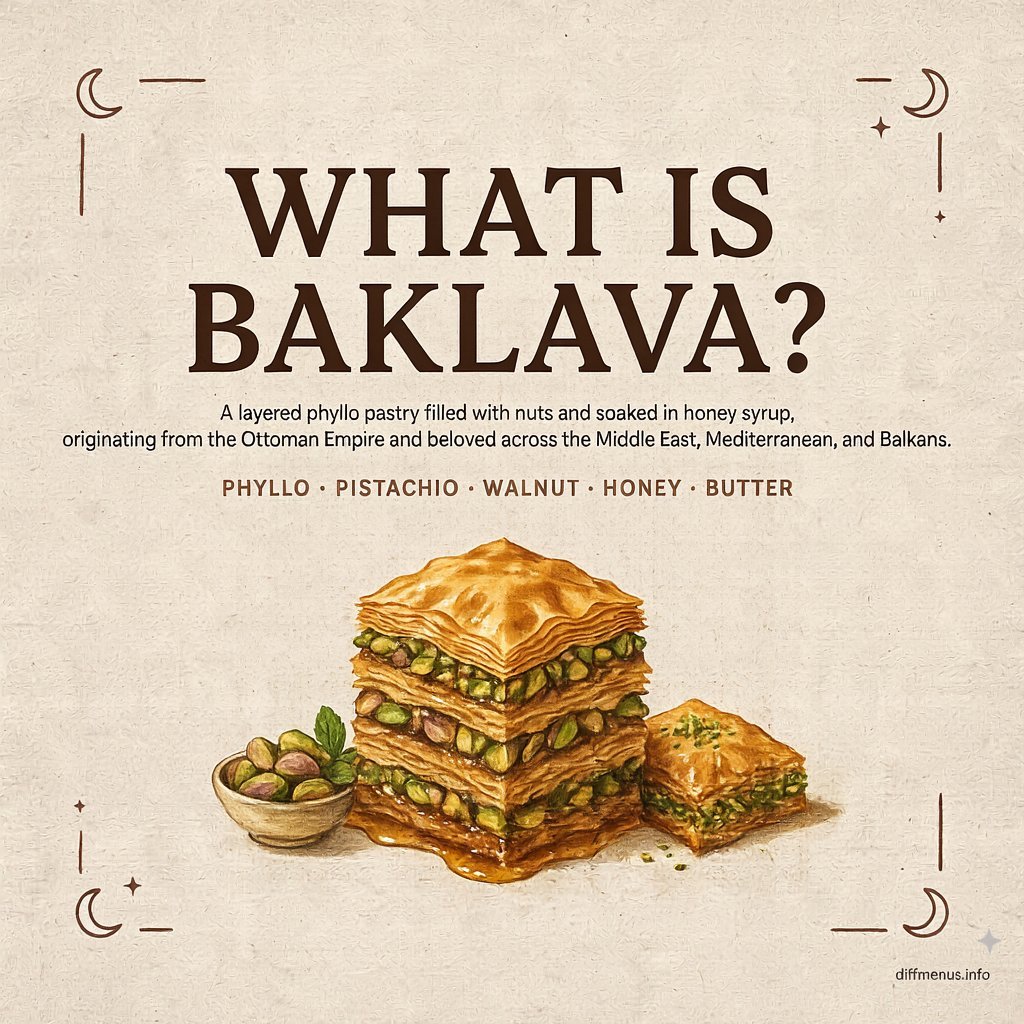
Baklava is a rich, sweet pastry made with layers of thin filo dough, nuts, butter, and sweet syrup. It is one of the most recognizable desserts associated with Turkish, Middle Eastern, Balkan, and Mediterranean cuisines.
The pastry is known for its combination of crisp, flaky layers and a rich nut filling, finished with a sweet syrup or honey-based topping. Depending on the region and recipe, baklava can contain pistachios, walnuts, almonds, or other nuts.
Although recipes differ across countries and regions, baklava remains a popular dessert for celebrations, holidays, family gatherings, and everyday enjoyment.
What Is Baklava Made Of?
Traditional baklava ingredients are relatively simple, although making the dessert requires careful layering.
The main ingredients usually include:
- Filo dough
- Butter or clarified butter
- Pistachios, walnuts, or other nuts
- Sugar
- Water
- Lemon juice
- Honey in some recipes
Some versions also include ingredients such as cinnamon, cardamom, or rose water.
The exact combination depends on the regional style of baklava.
What Does Baklava Taste Like?
Baklava has a distinctive combination of sweetness, nuttiness, buttery richness, and crisp texture.
The filo layers become golden and flaky during baking, while the syrup adds moisture and sweetness.
The nuts provide a slightly crunchy texture and rich flavor.
Pistachio baklava tends to have a deeper, more distinctive nutty flavor, while walnut versions can have a slightly earthier taste.
Turkish Baklava
Turkish baklava is one of the most famous styles of this dessert.
Pistachios are particularly important in many Turkish varieties, especially baklava associated with southeastern Turkey.
Turkish baklava is generally characterized by very thin layers of filo pastry, plenty of butter, and carefully prepared nut fillings.
Different regions and bakeries may produce their own variations in shape, filling, and syrup.
Baklava Ingredients and Layers
One of the defining characteristics of baklava is its layered construction.
A typical preparation involves:
- A layer of filo dough
- Melted butter
- Another filo layer
- A layer of chopped nuts
- Additional filo and butter
- More nut filling
- Multiple final layers of filo
- Butter before baking
- Sweet syrup after baking
The number of layers varies by recipe.
The result is a dessert with a crisp exterior and a rich, moist interior.
Popular Types of Baklava
There are many types of baklava, and the ingredients and shapes can vary significantly.
Pistachio Baklava
Pistachio baklava is particularly popular in Turkey and surrounding regions.
Finely chopped or ground pistachios are layered between sheets of filo, producing a rich nutty flavor and distinctive green color.
Walnut Baklava
Walnuts are another traditional choice.
Walnut baklava has a deeper, earthier nut flavor and is popular across several countries.
Chocolate Baklava
Modern versions sometimes incorporate chocolate into the traditional pastry.
Chocolate baklava isn’t necessarily traditional, but it has become popular as a contemporary variation.
Almond Baklava
Almonds can also be used as the primary nut filling.
They provide a slightly lighter flavor compared with walnuts or pistachios.
Mixed Nut Baklava
Some recipes combine several nuts to create a more complex flavor.
A mixture might include pistachios, walnuts, and almonds.
How Is Baklava Made?
Making traditional baklava involves several stages.
Prepare the Syrup
Sugar and water are commonly combined and simmered to create a sweet syrup. Lemon juice may be added to help balance the sweetness.
The syrup is allowed to cool depending on the recipe.
Prepare the Nuts
The nuts are finely chopped or ground.
Some recipes season them with cinnamon, cardamom, or other spices.
Layer the Filo
Filo sheets are carefully arranged in a baking dish.
Each layer is brushed with melted butter to create the characteristic flaky texture.
Add the Nut Filling
After several filo layers, a portion of the nut mixture is distributed evenly across the pastry.
Additional layers are then added.
Cut the Baklava
Before baking, the pastry is typically cut into squares, diamonds, rectangles, or other shapes.
Cutting it before baking makes serving easier after the layers become crisp.
Bake Until Golden
The baklava is baked until the filo becomes crisp and golden brown.
Add the Syrup
Once baked, the sweet syrup is poured over the pastry.
The syrup travels through the layers while the pastry cools, creating the characteristic combination of crisp and moist textures.
Why Is Baklava So Sweet?
The sweetness of baklava comes primarily from its syrup or honey-based topping.
Because the pastry contains multiple layers and nuts, the syrup helps bring all the components together.
The amount of syrup varies between recipes. Some styles are heavily soaked, while others use a more moderate amount to preserve a particularly crisp texture.
How to Serve Baklava
Baklava can be served at room temperature or slightly chilled, depending on preference.
Popular accompaniments include:
- Turkish tea
- Turkish coffee
- Plain yogurt
- Ice cream
- Fresh fruit
A small piece can be enough because baklava is rich and sweet.
Baklava for Special Occasions
Baklava is strongly associated with celebrations across many cultures.
It can be served during:
- Religious holidays
- Weddings
- Family gatherings
- Festivals
- Dinner parties
- Special celebrations
Its ability to be prepared in large trays also makes it practical for serving groups.
Is Baklava Turkish or Greek?
Baklava has a complex culinary history, and it is associated with several cultures and regions rather than belonging exclusively to one modern country.
It is particularly prominent in Turkish, Greek, Middle Eastern, Balkan, and Mediterranean cuisines, with each tradition developing its own versions.
Differences can include the choice of nuts, spices, syrup, thickness of the pastry, and preparation method.
Rather than one single recipe, baklava is best understood as a dessert with many regional traditions.
Turkish Baklava vs. Greek Baklava
Turkish and Greek baklava can look similar, but traditional recipes can differ.
Turkish versions often prominently feature pistachios or walnuts and use very thin filo layers.
Greek-style baklava may commonly use walnuts or a mixture of nuts and can incorporate spices such as cinnamon.
The syrup and preparation methods also vary.
There is no single recipe that represents every Turkish or Greek baklava, since regional and family variations are common.
How to Store Baklava
Baklava generally keeps well because its high sugar content helps preserve it.
For short-term storage, it can usually be kept covered at room temperature in a cool, dry place.
Refrigeration can affect the texture of the filo, making it less crisp, although some recipes or fillings may require refrigeration.
For homemade baklava, follow the storage recommendations for the specific recipe and ingredients used.
Frequently Asked Questions About Baklava
What is baklava made of?
Baklava is typically made with filo dough, butter, nuts such as pistachios or walnuts, and a sweet syrup made from sugar and water. Some recipes also use honey or spices.
Is baklava Turkish?
Baklava is strongly associated with Turkish cuisine but is also an important dessert in Greek, Middle Eastern, Balkan, and Mediterranean cuisines. Different regions have their own traditional versions.
What nuts are used in baklava?
Pistachios and walnuts are among the most common choices. Almonds and mixed nuts can also be used.
What does baklava taste like?
Baklava is sweet, buttery, nutty, and crisp, with syrup adding moisture and richness.
Is baklava served hot or cold?
Baklava is commonly served at room temperature, although some people prefer it chilled or slightly warmed.
How many layers does baklava have?
There is no universal number. The number of filo layers varies according to the recipe, pan size, and regional style.
Why is baklava cut before baking?
Cutting the pastry before baking makes it much easier to separate the individual pieces after the filo becomes crisp.
Final Thoughts
Baklava is a classic layered pastry that combines crisp filo, buttery richness, crunchy nuts, and sweet syrup. From pistachio-filled Turkish baklava to walnut-based regional variations, there are countless ways to enjoy this iconic dessert.
Whether served with Turkish coffee, tea, or on its own, baklava remains one of the most recognizable and beloved sweets in Turkish and Middle Eastern cuisine.