What Is Stracciatella?
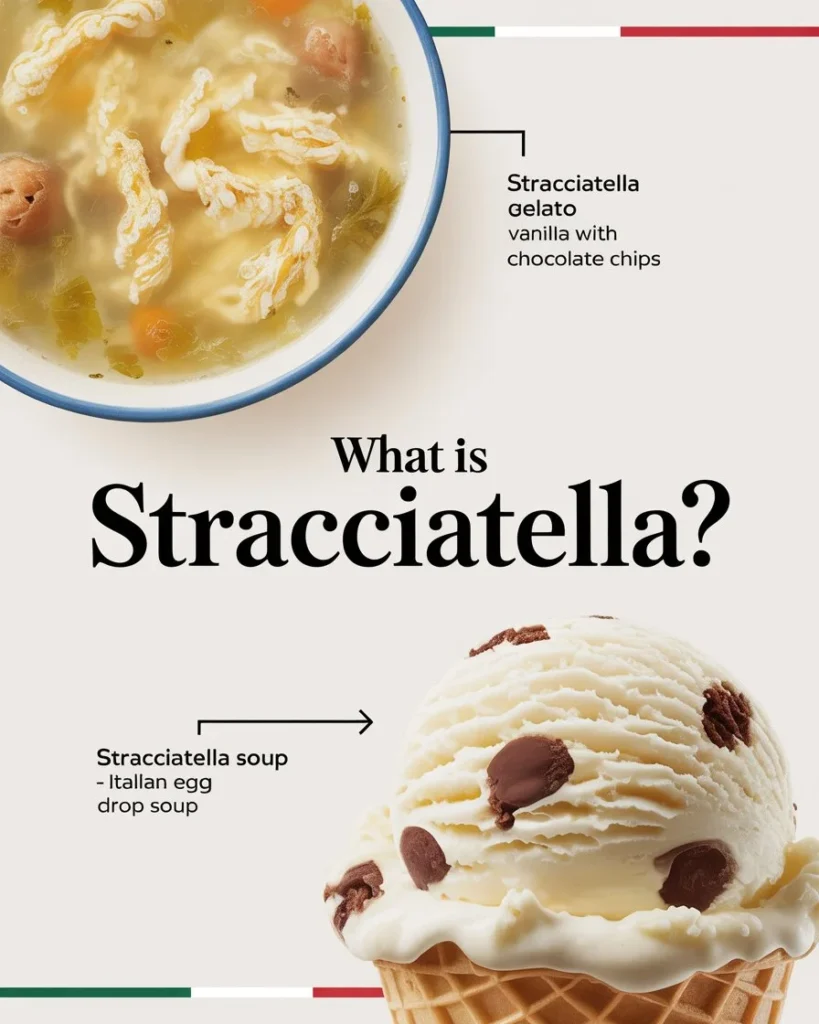
Stracciatella is an Italian food name that can refer to several different dishes and ingredients, depending on the context. The word is associated with the Italian verb stracciare, meaning “to tear” or “to shred,” which reflects the appearance of several foods known as stracciatella.
The three best-known versions are stracciatella cheese, stracciatella gelato, and stracciatella soup. Although they share the same name, they are completely different foods.
Stracciatella cheese is a specialty from Puglia, while stracciatella gelato is an Italian frozen dessert containing fine pieces of chocolate. Stracciatella soup is a traditional egg-and-cheese soup particularly associated with central Italy.
What Does Stracciatella Mean in Italian?
The name stracciatella comes from the Italian word stracciare, which means “to tear apart” or “to shred.”
This name makes sense when you look at the foods themselves. Stracciatella cheese consists of small shredded pieces of mozzarella mixed with cream, while stracciatella soup is made by creating small ribbons or pieces of cooked egg within broth.
The name therefore describes the characteristic torn or shredded appearance rather than one specific ingredient.
What Is Stracciatella Cheese?
Stracciatella cheese is a creamy Italian cheese traditionally made from shredded mozzarella curds combined with cream.
It is closely associated with Puglia, particularly the area around Andria, and is also the creamy filling found inside burrata.
The cheese has a soft, rich texture with delicate strands of mozzarella suspended in cream.
What Is Stracciatella Cheese Made Of?
Traditional stracciatella cheese has a relatively simple ingredient profile:
- Fresh mozzarella curds
- Cream
- Salt
The mozzarella is pulled or shredded into thin strands before being mixed with cream.
The result is creamy, milky, and delicate, with a texture that is softer and looser than regular mozzarella.
What Does Stracciatella Cheese Taste Like?
Stracciatella cheese has a mild, creamy and milky flavor.
Its taste is generally less intense than strongly aged cheeses. The cream gives it richness, while the fresh mozzarella provides a subtle dairy flavor and slightly elastic texture.
Because of its delicate flavor, stracciatella works particularly well with simple ingredients.
It can be served with:
- Fresh tomatoes
- Basil
- Olive oil
- Crusty bread
- Roasted vegetables
- Prosciutto
- Fresh herbs
- Pasta
Stracciatella Cheese vs. Burrata
Stracciatella and burrata are closely connected, but they aren’t exactly the same thing.
Stracciatella is the creamy mixture of shredded mozzarella and cream.
Burrata is a pouch of mozzarella that is filled with stracciatella and cream.
When you cut open a burrata, the creamy filling inside is essentially stracciatella.
This makes stracciatella one of the defining components of traditional burrata.
What Is Stracciatella Gelato?
Stracciatella gelato is a classic Italian gelato flavor made from a creamy milk or cream-based gelato with thin shards of chocolate distributed throughout it.
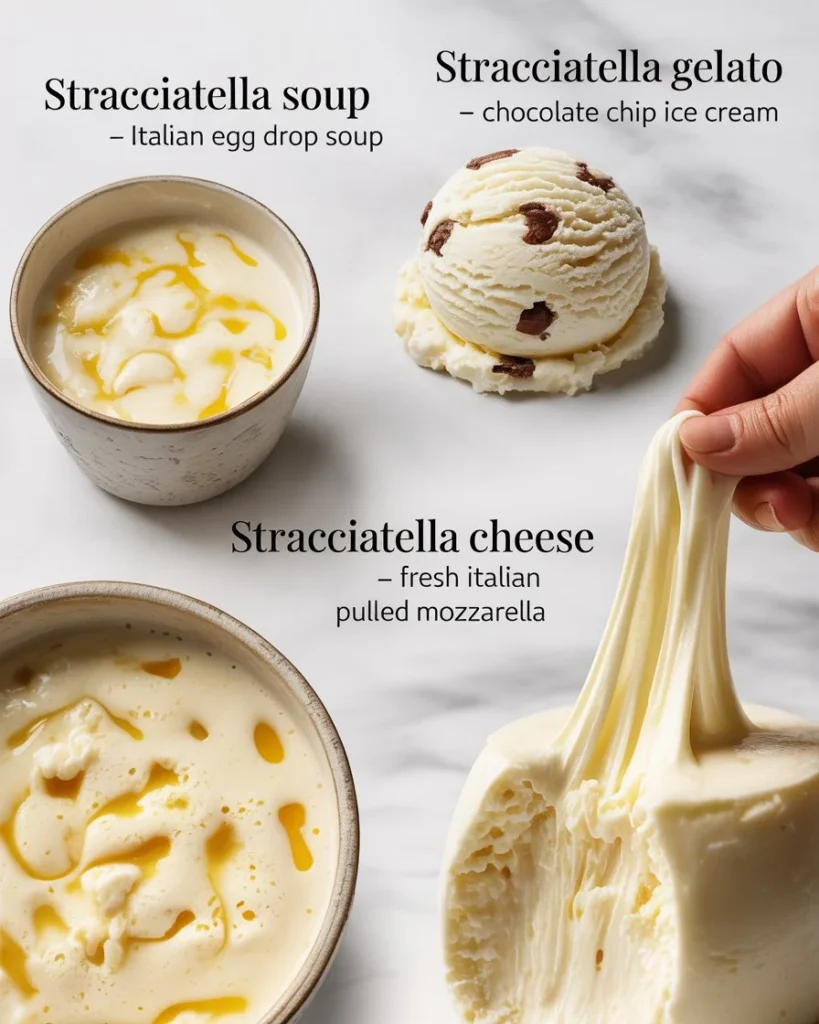
Unlike chocolate chip ice cream, the chocolate in stracciatella is typically broken into very thin pieces that create a delicate chocolate crunch as you eat it.
The flavor is usually centered around creamy milk or vanilla-like gelato combined with bittersweet chocolate.
What Does Stracciatella Gelato Taste Like?
Stracciatella gelato has a creamy dairy base with small pieces of chocolate throughout.
The combination gives you:
- Creamy sweetness
- Mild vanilla or milk notes
- Bittersweet chocolate
- Light chocolate crunch
It’s a good option if you enjoy chocolate but don’t necessarily want a heavily chocolate-flavored ice cream.
What Is Stracciatella Soup?
Stracciatella soup is a traditional Italian soup made by stirring beaten eggs and cheese into hot broth.
As the egg mixture cooks, it forms small ribbons or strands throughout the broth, creating the distinctive appearance associated with the name.
The dish is particularly associated with central Italy and is often known as stracciatella alla romana.
Stracciatella Soup Ingredients
Traditional recipes commonly use:
- Eggs
- Parmesan cheese
- Chicken or meat broth
- Black pepper
- Nutmeg
Some recipes also use lemon zest or other seasonings.
The result is a simple, warming soup that can be prepared with relatively few ingredients.
How to Eat Stracciatella Cheese
There are many ways to enjoy Italian stracciatella cheese.
One of the simplest approaches is to spoon it over toasted bread and finish it with extra-virgin olive oil, salt, and freshly ground pepper.
You can also use it as a creamy topping for pasta, pizza, roasted vegetables, or grilled bread.
Because stracciatella is delicate, it generally works best when paired with ingredients that complement rather than overpower its flavor.
Stracciatella on Pizza
Stracciatella can make an excellent finishing ingredient for pizza.
Rather than baking the delicate cheese for a long time, it is often added toward the end or after the pizza comes out of the oven.
It pairs particularly well with:
- Tomato
- Basil
- Prosciutto
- Mortadella
- Roasted vegetables
- Chili oil
- Fresh herbs
The contrast between hot pizza and cool, creamy stracciatella creates a rich texture.
Stracciatella Pasta
Stracciatella cheese can also be used to add creaminess to pasta dishes.
You can spoon it over freshly cooked pasta and combine it with ingredients such as tomatoes, basil, olive oil, roasted vegetables, or cured meats.
Because the cheese is already rich and creamy, you don’t necessarily need a heavy sauce.
A simple pasta dish with fresh tomatoes, olive oil, basil, and stracciatella can showcase the cheese particularly well.
Is Stracciatella the Same as Mozzarella?
Not exactly.
Stracciatella cheese is made using mozzarella curds, but it has a much softer and creamier consistency because the shredded mozzarella is combined with cream.
Regular mozzarella is generally shaped into a cohesive ball or other form, while stracciatella consists of loose mozzarella strands suspended in cream.
Is Stracciatella Healthy?
The nutritional value of stracciatella depends on which type you’re referring to.
Stracciatella cheese contains dairy fat and protein, while stracciatella gelato generally contains added sugar and fat. Stracciatella soup can be relatively simple, with its main ingredients providing protein and other nutrients.
Portion size and the rest of the meal also matter.
If you’re monitoring calories, fat, sodium, or other nutrients, check the nutritional information for the specific product or recipe.
Frequently Asked Questions About Stracciatella
What is stracciatella made of?
It depends on the type. Stracciatella cheese is traditionally made from shredded mozzarella curds, cream, and salt. Stracciatella gelato is a creamy gelato containing fine chocolate pieces, while stracciatella soup uses eggs, cheese, and broth.
Is stracciatella a cheese?
Yes, stracciatella cheese is a traditional Italian fresh cheese made from shredded mozzarella curds and cream.
Is stracciatella inside burrata?
Yes. Traditional burrata is made by filling a mozzarella pouch with stracciatella and cream.
What does stracciatella mean?
Stracciatella is related to the Italian verb stracciare, meaning to tear or shred. The name reflects the torn or shredded appearance found in several foods carrying the name.
What does stracciatella taste like?
Stracciatella cheese has a mild, creamy, milky flavor. Stracciatella gelato has a sweet creamy base with pieces of chocolate, while stracciatella soup has a savory broth and egg-and-cheese flavor.
Is stracciatella the same as burrata?
No. Stracciatella is the creamy shredded mozzarella filling used inside traditional burrata. Burrata is the outer mozzarella pouch together with its creamy filling.
Final Thoughts
Stracciatella is one of those Italian food names that can refer to three very different specialties: creamy stracciatella cheese, chocolate-studded stracciatella gelato, and savory stracciatella soup.
If you’re interested in Italian cuisine, stracciatella cheese is particularly worth trying. Its creamy texture and mild flavor make it a versatile ingredient for pizza, pasta, toast, salads, and simple Italian dishes.
As you explore more Italian food, you can also discover other traditional ingredients, dishes, desserts, and recipes that showcase the variety of Italian cuisine.